PROJECT
Bit Store: Component Discovery Experience
COMPANY
Get more brain
ROLE
UIUX Designer
TEAM
Product
TOOL USED
Figma
Overview
About this project
Bit Store is a component discovery platform designed to help users browse, search, and explore reusable learning components known as Bits. As the platform continued to grow, finding relevant components became increasingly difficult for non-technical users. The goal of this project was to create an intuitive discovery experience that enables educators, authors, and content creators to quickly locate the resources they need while maintaining consistency across desktop and mobile devices.
Design Process
The project began with research into existing component libraries, digital marketplaces, and content discovery platforms. I analysed design system libraries, digital marketplaces, and portfolio browsing experiences to identify common search, filtering, and discovery patterns. Based on these findings, I explored multiple design directions, testing different approaches to navigation, filtering, and content presentation. The concepts were refined through collaboration with stakeholders before progressing into high-fidelity designs and responsive layouts.
Research
Design exploration / IA
Low fidelity wireframes
Design system / High fidelity
Test/Review/Launch
Challenge
As the number of available components continued to grow, users needed a faster way to discover relevant content without requiring technical knowledge of the platform. Many users were educators, authors, and subject-matter experts rather than developers. Instead of searching by component names or technical categories, they often approached content from their own domain perspective, such as food and drink, health, finance, or language learning. The challenge was to design a scalable discovery experience that balanced powerful filtering capabilities with a simple and intuitive interface for non-technical users.
Outcome
Delivered three distinct discovery concepts exploring different approaches to navigation, filtering, and content exploration. The proposed solutions introduced multiple discovery paths, including search, sorting, industry-based categories, and design-pattern filtering, helping non-technical users locate relevant components more efficiently. The project established a scalable foundation for future growth while improving the overall browsing experience across desktop and mobile devices.
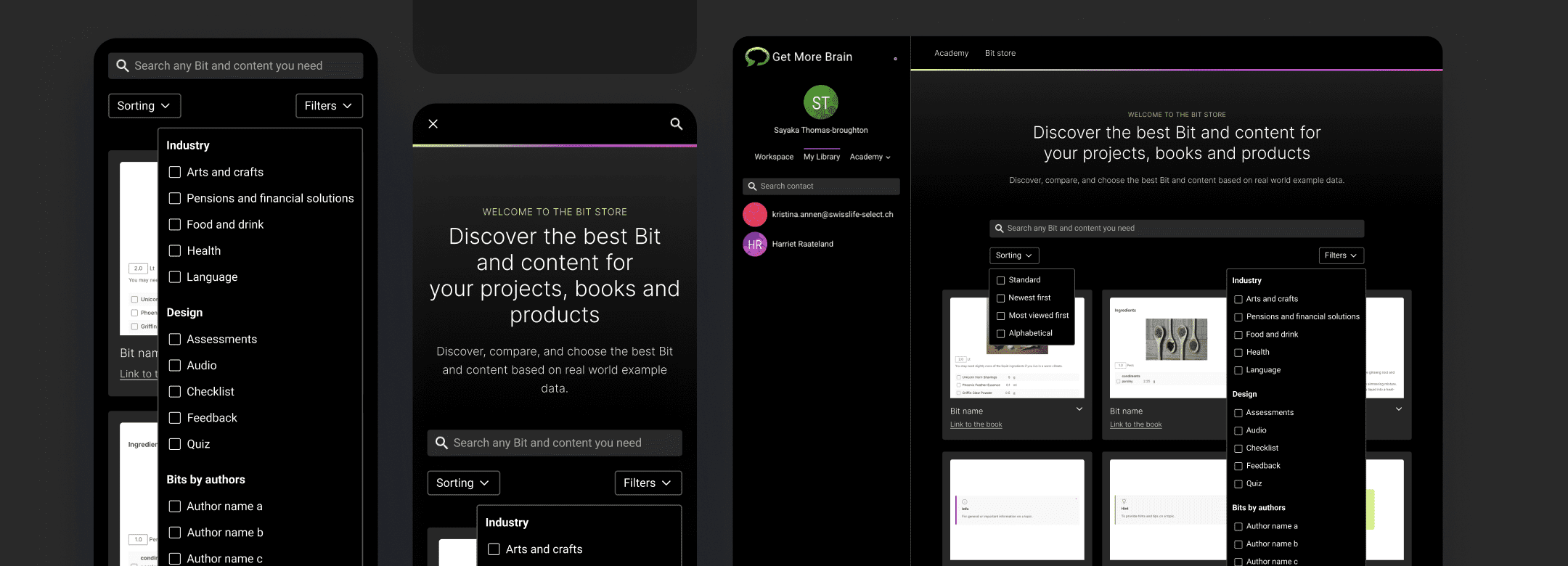
Concept 01 - Integrated Search & Filtering
This concept explored a discovery experience integrated within the existing workspace. Search, sorting, and filtering tools were designed to help users quickly narrow down results without leaving their current workflow. To support non-technical users, filters were organised around familiar mental models. Users could browse by industry categories such as Food & Drink, Health, Finance, or Language Learning, as well as by design patterns such as quizzes, feedback components, and assessments. This approach made it easier to discover relevant content without requiring knowledge of the underlying component structure.

Concept 02 - Dedicated Discovery Experience
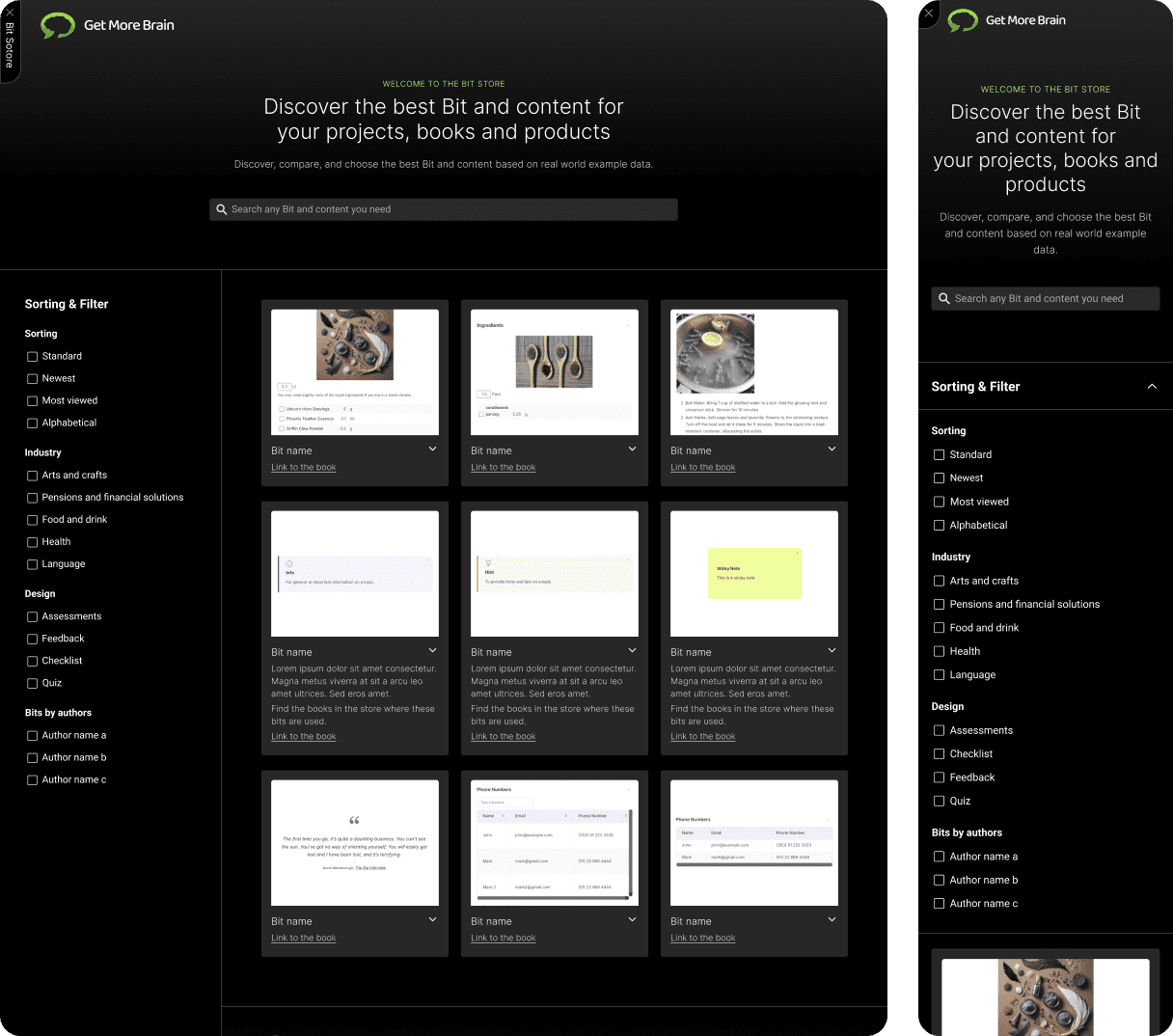
Explored a full-width browsing experience that prioritises content discovery by reducing workspace distractions and surfacing advanced filtering options.